

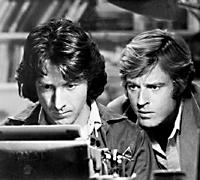
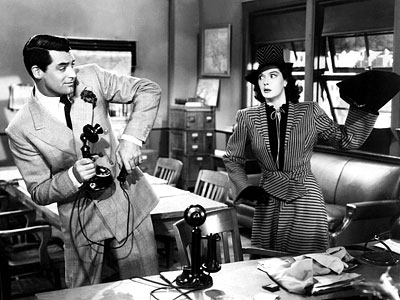
INTRODUCTION TO
THE IMAGE OF THE JOURNALIST IN POPULAR CULTURE
(IJPC) ONLINE DATABASE©
By Joe Saltzman
CLICK HERE TO GO DIRECTLY TO THE ONLINE IJPC DATABASE
Updated on a Daily Basis
More than 102,000 items on journalists, public relations practitioners and news media
Television (36,887)
Films (26,041 movies, movies made for TV and miniseries and serials)
Fiction (17,913 novels, 1,823 short stories, 695 plays and 419 poems)
Cartoons (2,795), Comic Books (3,938) & Comic Strips (6267items)
Non-Fiction (Documentaries-News-Sports) (3,928 items)
Radio-Podcasts (4,429 items)
Humor (752 items)
Commercials (588 items)
Music (Songs-Compositions) (315 items)
Games (280 items)
Early References (119 items)
Internet-Websites (113 items)
Art (55 items)
The Image of the Journalist in Popular Culture (IJPC) Database© is an ever-growing source of information. New additions, acquisitions and revisions by Joe Saltzman, Director of the Image of the Journalist in Popular Culture, keep it constantly expanding.
The IJPC Database includes print journalists (from large urban newspapers to small country weeklies, from magazines to the Internet, including editors, reporters, photojournalists, correspondents, columnists, publishers, newsboys), broadcast journalists (from networks to local stations, including reporters, anchors, correspondents, producers, writers, technical personnel, news directors, station owners, network executives and management), online journalists (podcasters, bloggers, website reporters and editors), public relations practitioners (from press agents to publicists), and the news media (anonymous reporters who show up in countless films and television movies ranging from press conferences to packs of reporters shouting questions or chasing after the main character to individual reporters asking questions).
TIP: Leave all queries blank and Click on SUBMIT and the entire database will appear. You can then organize the database by clicking on the various categories that follow.
You can sort by ascending or descending order in any column. You can reorganize the database by any of its seven columns. For example, by YEAR. Or by TITLE (A to Z). Or by TYPE (i.e., Movies or TV). Or by AUTHOR. Or by COUNTRY (Reference). Or by OCCUPATION (Comments). Or by FORMAT (to determine what is available and what isn’t available). If you want to read more about any individual title, click on the title itself.
CATEGORIES:
YEAR – The year (sometimes approximate) the item was released. One source often differs with another so dates can vary widely. “1” indicates anything B.C. The database goes from 1 to 2010. TIP: Click on YEAR and the entries will start with 1. Click again and the entries will start with 2010.
TITLE – The name of the item. TIP: Click on TITLE and the entries will start with the beginning of the alphabet-numbers. Click again and the entries will start with Z
TYPE – Sub-groupings of all the items for easy access. The following legend is used:
A Art
C Cartoon (Animation)
CB Comic Books
CC Commercials
CS Comic Strips
D Non-Fiction Print and Internet, Miscellaneous (Documentary-News-Sports)
DF Non-Fiction – Non-English Speaking (Documentary-News-Sports)
DM Non-Fiction Films (Documentary-News-Sports)
DR Non-Fiction Radio (Documentary-News-Sports)
DT Non-Fiction Television (Documentary-News-Sports)
ER Early References
G Games (Video, Board and Card Games)
H Humor (Jokes, Cartoons, Humor)
M Movies (the second largest grouping)
MF Movies – Non-English Speaking
MS Movie Scripts
MT Movies Made for Television and Miniseries including serials
MTF Movies Made for Television and Miniseries including serials – Non-English Speaking
MUS Music (Songs)
N Novels
NJ Novels – Juvenile
NM Novels – Mystery
NR Novels – Romance
NS Novels – Sports
NSF Novels – Science Fiction
NW Novels – Western
P Plays – Dramas
PO Poetry
R Radio- Podcasts
RS Radio Soap Operas
SM Short Stories – Mystery
SS Short Stories – General
SSF Short Stories – Science Fiction
SW Short Stories – Western
T Television (the largest grouping)
TF Television – Non-English Speaking
TS Television Soap Operas
W Internet-Web Sites
TIP: Highlight any sub-grouping (such as Movies) and that sub-grouping will only show up. Then add an occupation or country or title or any other query. Only the sub-grouping (movies) will show up in your search. You can also highlight several sub-groupings (all the movies or novel categories) and all those entries will show up in your search.
FORMAT – For movies, radio and TV, it is the format on which the item is recorded (the tape format or the disc format with IJPC reference numbers). These tapes and discs are available from the IJPC at a nominal fee for duplicating, handling and shipping. With Novels and Short Stories, the format is listed as OWN (in collection) or COPY from various library sources (copies of the original were made for the IJPC Collection). If the format space is blank, it means the item is not yet in the IJPC Collection.
AUTHOR – Listing of writers. TIP: Search the author column by writing the LAST NAME first followed by a COMMA. (Hecht, Ben).
REFERENCE/COUNTRY – Primary references or miscellaneous information about the item, often a good source for information about the item or an important date. Country of origin is also included for international items. TIP: Type in any country (Germany) and every item from (Germany) will show up. Note: For England, use UK. Both Soviet Union and Russia are used. If no country is listed, it is usually a film made by the United States.
COMMENTS – Used for listing occupation and major information about the entry. Each entry begins with the occupation or principal subject. This column includes actors, characters and other information about the entry. TIP: This column is your best way of finding individuals (William Randolph Hearst or just plain Hearst) or ideas and concepts (Ethnic Group, Gossip, Advice, Occupation).
A number of reference books can be used to supplement The IJPC Database comments. IJPC Associate Director Richard R. Ness’ From Headline Hunter to Superman: A Journalism Filmography, neatly summarizes 2,100 films featuring media or journalists. The Internet Movie Database (IMDB) is a comprehensive source for any film or TV program, although it is subject to the inevitable errors of such a large enterprise. Tim Brooks and Earle Marsh’s The Complete Directory to Prime Time Network TV Shows, 1946-Present offers excellent television program summaries. Frank Buxton and Owen Bill’s The Big Broadcast, 1920-1950 is a helpful guide for radio program summaries.
No matter how careful we are or how many times we go over the IJPC Database, any project of this size and scope will have errors in omission and commission. Please inform us of any errors you find and we will make the changes in The IJPC Database. We appreciate your help. Please e-mail .(JavaScript must be enabled to view this email address) or call 310-663-1390 if you have any questions or comments, or if you find any errors in the database (there are inevitable typographical and content errors – please help us correct these errors or inconsistencies whenever you find one).
FINAL NOTE: If you encounter any bugs in the online database query system, please e-mail us immediately so we can fix it. This is a work in progress.