
HEADLINES
Available Online Free: The Image of the Journalist in Popular Culture (IJPC) Database©



The Image of the Journalist in Popular Culture (IJPC) Database
with more than 100,000 items on the images of journalists,
public relations practitioners and media
in films, television, radio, fiction, commercials, video games, comics, cartoons and other aspects of popular culture is now online.
Click here to go to an introduction to the database or go directly to the Online IJPC Database, which is updated on a daily basis.
Read more about this headline »
THE IJPC JOURNAL
an online peer review journal is now accepting manuscripts

Volume Eleven and Twelve -- Fall 2024 to Spring 2025
Volume Ten - Fall 2022 to Spring 2023
Volume Nine -- Fall 2020 to Spring 2021
Volume Eight - Fall 2018 to Spring 2020
Volume Seven - Spring 2016 - Spring 2018
Volume Five - Fall 2013 - Spring 2014
Volume Four - Fall 2012 - Spring 2013
Volume Three - Fall 2011 - Spring 2012
Volume Two - Fall 2010
Volume One - Fall 2009
The Image of the Journalist in Popular Culture (IJPC) Journal is an online academic journal that adheres to the highest standards of peer review. Its purpose is to further the mission of the Image of the Journalist in Popular Culture Project to investigate and analyze, through research and publication, the conflicting images of journalists in every aspect of popular culture, from film, television, radio, fiction, commercials, cartoons, comic books to music, art, humor and video games – demonstrating their impact on the public’s perception of journalists.
The co-founding editors -- Matthew C. Ehrlich of the University of Illinois at Urbana-Champaign, Sammye Johnson of Trinity University and Joe Saltzman of the University of Southern California – join editors Laura Castaneda from the University of Southern California and Richard Ness from Western Illinois University seeking submissions that further the mission of the Image of the Journalist in Popular Culture Project to investigate and analyze, through research and publication, the conflicting images of journalists in every aspect of popular culture, from film, television, radio, fiction, commercials, cartoons and comic books to music, art, humor and video games – demonstrating their impact on the public’s perception of journalists.
The IJPC Journal’s editorial board members are Maurine H. Beasley, University of Maryland; Bonnie Brennen, Temple University; Mary-Lou Galician, Arizona State University; Howard Good, SUNY, New Paltz; Loren Ghiglione, Northwestern University; Norma Fay Green, Columbia College, Chicago; Radhika Parameswaran, Indiana University; Karen Miller Russell, University of Georgia and Barbie Zelizer, University of Pennsylvania.
The IJPC Journal is an interdisciplinary journal that, while centered on journalism, is open to contributions from many disciplines and research approaches, using a variety of methods and theoretical perspectives. Original investigation is expected, as well as clear, lucid writing and presentation.
For more information or to submit a manuscript, please e-mail [email protected]
The Image of the Black Journalist in Popular Culture
A Special Edition of the Image of the Journalist in Popular Culture (IJPC) Journal
There is virtually no research when it comes to the image of the Black journalist in popular culture. In a special IJPC section – The Image of the Black Journalist in Popular Culture – we offer the first attempt to analyze what that image is in film, television and novels through academic and professional perspectives.
Christina L. Myers, an assistant professor at Michigan State University, goes back to the origin of film to write about “Countering the Frame: Black Journalists and the Politics of Representation in Silent Film.” This groundbreaking article examines the representation of Black journalists in early 20th-century silent film, focusing on a small but significant group of race films produced by African American filmmakers. She points out that while white-produced silent films often perpetuated harmful stereotypes of Blackness through caricatures and Blackface, race films offered radically different portrayals of Black professionals, including journalists. Using Critical Race Theory—particularly the concept of counter-storytelling—this study explores how Black filmmakers used journalism as a narrative tool to challenge dominant racial ideologies and to assert Black intellect, resilience, and civic agency. Ultimately, this essay contends that portrayals of Black journalists in silent-era race films served not only as corrective narratives but also as preliminary affirmations of Black cinematic authorship. These films continue to be vital artifacts for comprehending the intersections of race, media, and historical memory—and for tracing the enduring legacy of Black storytelling as both cultural resistance and creative reclamation.
Journalist Susan Smith Richardson takes a close look at “Committing Journalism While Black: Colorblind Casting and the Portrayal of Black Journalists.” She points out that the Hollywood studio system has made just a few feature films about Black journalists, and those movies don’t reflect most Black journalists’ experiences. Instead, the films are typically vehicles for crossover Black stars cast in roles that white actors could play. The color-blind casting obscures the marginalization Black journalists have historically experienced in newsrooms. African Americans have fought— and are still fighting— to be valued in white legacy media. They seldom get plum assignments or prestigious beats, like the characters in the films reviewed for this article. While well-intentioned, the films don’t address the challenges Black journalists face in accessing the same opportunities as their white colleagues, leaving audiences with a skewed view of the status of Black reporters and editors in U.S. newsrooms.
Miki Turner, a professor of professional practices at the University of Southern California, points out that the plight of the Black journalist in movies has been “spot on in some cases, particularly in the two films discussed” in “When Hollywood Gets It Right.” To gather more insight into the two films – Livin’ Large! and Heat Wave – and what it was like for real Black reporters during the 1960s, 1980s, 1990s and the turn of the century, Turner interviewed several of her former journalism colleagues as well as the director of Livin’ Large!, the writer of Heat Wave, and some TV writers, producers and show runners. Their collective perspectives and reflections were critical in helping her separate fact from fiction, particularly why some Black reporters, like the fictional Dexter Jackson in Livin’ Large! are still unable to sometimes tap into their own authentic voices in the stories they want to tell.
Meredith Dr. Clark, associate professor of race and political communication at the University of North Carolina, offers a case study on the depiction of Black journalists in popular culture by focusing on Khadijah James (played by Dana “Queen Latifah” Owens), founder and editor-in-chief of Flavor magazine on the Fox Network show, “Living Single” from 1993 to 1998. The study focuses on how Khadijah’s existence paradoxically extended oppressive controlling images of Black-collar entrepreneurship while contrasting norms of race, gender and sexuality that often oversimplify the realities of iconic Black women journalists.
Journalist Regina Maria de Sousa Dias Soares from Brazil offers the first study of “The Image of the Black Journalist in Brazilian Popular Culture.” She examines the stereotypes, narratives and media depictions that significantly shape and influence public perceptions of Black journalists in Brazil. By thoroughly analyzing these images and their impact, the study offers crucial insights into the ongoing discourse surrounding racial representation, diversity and equity within Brazil’s media landscape.
Dr. Omega Douglas, Head of Journalism and Strategic Communications at Goldsmiths College, University of London, argues that the DEI backlash in the United States and the United Kingdom is harming journalism, which is already in crisis. News organizations are failing to reflect society – by the content they produce and the people who produce it. Those suffering the most are Black women who are among the most underrepresented groups in both American and British newsrooms. Fictionalized accounts of Black women journalists written by Black female journalists offer important insight into the skewed and inaccurate views provided by real-life mainstream news organizations. Douglas points out that popular culture is important in that it challenges power in ways mainstream Western news outlets are largely failing to do.
We hope to publish more articles in the coming months for this special section on “The Image of the Black Journalist in Popular Culture.” Articles about the image of the Black journalist in novels, television and other aspects of popular culture are currently being written by scholars across the country.
The Image of the Sports Journalist in Popular Culture
A Special Edition of the Image of the Journalist in Popular Culture (IJPC) Journal
|
Sports have long been an important window into our society, with popular culture regularly featuring the sports journalist as a prominent character. Sports reporters and writers in movies, novels, television, and other popular media have not been much different from their “straight news” counterparts, although their venue has made them unique. There have been syndicated sports columnists who do anything to get an exclusive, including using blackmail and payoffs. But the majority of sportswriter characters simply have gone out and done their jobs. Some have been heroic in ferreting out corruption in sports, risking public animosity. Most often they have been used as realistic dressing for biographies of sports personalities. |
|
|
|
The Image of the Journalist in Silent Film
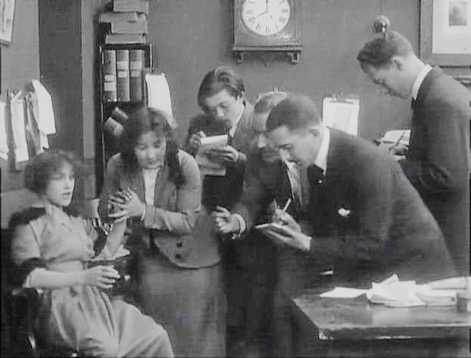
The landmark study, The Image of the Journalist in Silent Film, 1890 to 1929, Parts One and Two, containing 3,462 silent films with 21 appendices totaling more than 10,900 pages has been published in Volumes Seven and Eight of The IJPC Journal.
In Part One: 1890 to 1919, a total of 1,937 films, with each character and event identified and all of the table information encoded, were annotated and put into eleven appendices – Appendix 1, 1890-1909 (104 pages); Appendix 2, 1910 (83 pages); Appendix 3, 1911 (92 pages); Appendix 4,1912 (179 pages); Appendix 5, 1913 (280 pages); Appendix 6, 1914 (617 pages); Appendix 7, 1915 (771 pages); Appendix 8, 1916 (788 pages); Appendix 9, 1917 (764 pages); Appendix 10, 1918 (471 pages); Appendix 11, 1919 (478 pages). Many of the films include jpegs of original reviews, advertisements and photographs showing journalists in action.
In Part Two: 1920-1929, a total of 1,514 films with each character and event identified and all of the table information encoded, were annotated and put into ten more appendices -- Appendix 12, 1920 (753 pages); Appendix 13, 1921 (702 pages); Appendix 14, 1922 789 pages); Appendix 15, 1923 (689 pages); Appendix 16, 1924 (538 pages); Appendix 17, 1925 (605 pages); Appendix 18, 1926 (573 pages); Appendix 19, 1927 (573 pages); Appendix 20, 1928 (620 pages); Appendix 21, 1929 (576 pages). Many of the films include jpegs of original reviews, advertisements and photographs showing journalists in action. In the endnotes, future researchers can also find a complete list of films dealing with specific journalists, such as cub reporters, female reporters or pack journalists.
This first comprehensive study is an analysis of of the beginning of cinema’s earliest depictions of the journalist, mostly newspaper reporters, editors and publishers. The articleas summarize the results of the study by decade, genre, gender, ethnicity, media category, job title, and the description of the journalist’s professional and personality traits. The discussion segment reviews the films in the context of specific kinds of journalists: male reporters, war correspondents, female reporters, columnists, cub reporters, editors, critics, cartoonists and illustrators, photojournalists and newsreel shooters, pack journalists, printers and other news employees, and publishers, owners and media barons. There are also sections dealing with the journalism as depicted in the early years of the silent films: romance in the newsroom; poverty, honesty and morality: newsboys and office boys; the importance of the newspapers in silent film and the unidentified news staff; depiction of journalism in silent films as analyzed by real journalists, and journalism and the new motion picture industry.
In addition to the major articles, there are 21 appendices that chronicle each of the 3,462 films by including the original reviews of the film in a variety of silent film periodicals. Most of the silent films included in the study were not available for viewing; They are either considered lost, whereabouts unknown or in special collections throughout the world. Most of the research relied on reviews in the many silent film periodicals that populated the early years of the 20th century.
In addition, there is now available The Image of the Journalist in Silent Film, 1890 to 1919, a 6:37:00 compilation with excepts from 56 movies tracing the origins of the image of the journalist in motion pictures and Part A: The Image of the Journalist in Silent Film, 1920-1929, a 11:45:00 compilation with excerpts from 79 movies and Part B: Celebrity Journalists, Newsboys, the Newspaper in Silent Films, Newsreels, 1920-1929, a 4:30:30 compilation with excerpts from 71 movies.
A special two-hour video of six silent films that sums up the image of the journalist in silent film is also available.
The Image of the Journalist in Popular Culture—Now Available at the USC Digital Library
The Image of the Journalist in Popular Culture is now public.
https://digitallibrary.usc.edu/Archive/Image-of-the-Journalist-in-Popular-Culture-video-collection-2A3BF1M1WUHT1
It’s on the Home page under:
Recent Addisions
USC Scholarship
Cinematic and Performing Arts
It’s on the Collections page alphabetically under “Image”.
https://digitallibrary.usc.edu/CS.aspx?VP3=CMS3&VF=CollectionPage
All IJPC videos and Joe Saltzman documentaries in addition to other news videos and special projects are available on this site.
The Future of the Image of the Journalist in Popular Culture
When Howard Good (professor of journalism at SUNY, New Paltz) sent the editors of The IJPC Journal an essay on the future of the image of the journalist in popular culture, he posed an important question: what will that future be like? As Good writes, the image of the journalist “is, like the institution of journalism itself, in crisis. In fact, the image is in crisis because journalism is.” His conclusion that “it seems the journalist may have only a limited future as a figure in the panorama of popular culture” was a subject that we felt could benefit from further exploration.
So the editors decided to ask four prominent scholars to write their own predictions of what the future of the image of the journalist might be. They are Maurine Beasley, professor emerita of journalism at the University of Maryland College Park; Bonnie Brennen, professor emerita of journalism at Marquette University; Henry Jenkins, provost professor of communication, journalism, cinematic arts and education at the University of Southern California; and Paulette D. Kilmer, professor of communication at the University of Toledo. Some of the authors disagreed with Good, while others used his essay as a starting point for their own perspectives. The result is five essays that explore what the image of the journalist in popular culture may look like as the twenty-first century continues into an unknown future.
The essays are available in The IJPC Journal, Volume 9, Fall 2020 to Spring 2021
The 21st Century Image of the Journalist in Hallmark Films, 2000-2020
The landmark study, The 21st Century Image of the Journalist in Hallmark Films, 2000-2020 has been published in Volume 9 of the IJPC Journal.
The two-year study is included along with seven alphabetical appendices annotating each of the 360 films studied by gender, ethnicity, media category, job title, and description of major and minor characters plus still frames from the films featuring journalists.
A number of surprises emerged in this first analysis of the 21st-century image of the journalist in Hallmark films.
The great majority of journalists depicted in 360 films were positive images and since a majority of Hallmark viewers get their concept of a journalist from news organizations and social media friendly to their belief system, these images contradicted most of what they have been told about mainstream newsgatherers.
A large portion of the major characters were strong females and while White journalists made up the majority depicted, Black and Asian characters showed up in more frequent numbers than comparative films and TV programs featuring journalists. They were also as powerful and positive as their White counterparts. Hispanics, however, were disproportionally underrepresented.
The negative journalists – usually paparazzi and tabloid journalists – were usually minor characters found in mystery series and were either murdered, sent to prison, or tried to redeem themselves at the end of the film.
Saltzman discovered that journalists’ depictions in those films are largely positive. That in turn contradicts what many Hallmark viewers (who tend to be socially and politically conservative) likely have been told about the so-called “mainstream media.”
Finally, Joe Saltzman presents the first analysis of the image of the journalist in Hallmark films: that is, films airing on the television channels owned by the well-known greeting card company. Saltzman discovered that journalists’ depictions in those films are largely positive. That in turn contradicts what many Hallmark viewers (who tend to be socially and politically conservative) likely have been told about the so-called “mainstream media.”
The Heroes and Scoundrels Journalist in Popular Culture Project
The Heroes and Scoundrels Journalist in Popular Culture Project includes:
Heroes and Scoundrels: The Image of the Journalist in Popular Culture by Matthew C. Ehrlich, professor of journalism at the University of Illinois at Urbana-Champaign and Joe Saltzman, professor of journalism at the University of Southern California. Publication date: April, 2015. University of Illinois Press.
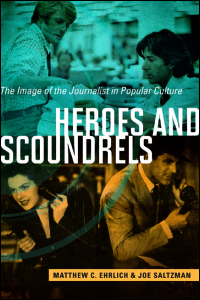
The Heroes and Scoundrels Website, which features chapter summaries, updates and new material.
The Heroes and Scoundrels Video, a companion 40-hour video for use ONLY in the classroom and for additional research is available August, 2015. You have to be a member of the IJPC Associates to get the video -- but if you show proof of purchase of the book, the IJPC Associate membership fee will be $35 instead of the regular $50.
Extended Video Introduction to Heroes and Scoundrels: The Image of the Journalist in Popular Culture
Video Introduction to Heroes and Scoundrels: The Image of the Journalist in Popular Culture
Click here to order the book in hardcover, paperback, kindle and Ipad-Iphone and other mobile devices
Click here to order the video -- available to IJPC Associates only
The Image of the Journalist in Popular Culture—Review: American Journalism
American Journalism review of the IJPC
Read more about this headline »
SOB SISTERS: THE IMAGE OF THE FEMALE JOURNALIST IN POPULAR CULTURE
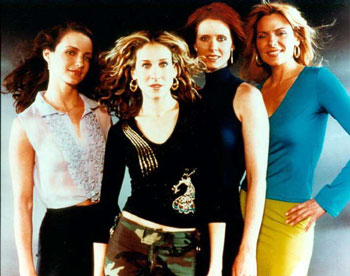
The image of the female journalist in popular culture revolves around a dichotomy never quite resolved. The female journalist faces an ongoing dilemma: How to incorporate the masculine traits of journalism essential for success – being aggressive, self-reliant, curious, tough, ambitious, cynical, cocky, unsympathetic – while still being the woman society would like her to be – compassionate, caring, loving, maternal, sympathetic. Female reporters and editors in fiction have fought to overcome this central contradiction throughout the 20th century and are still fighting the battle today.
Updated: 5-2010
The Image of the Public Relations Practitioner in Popular Culture
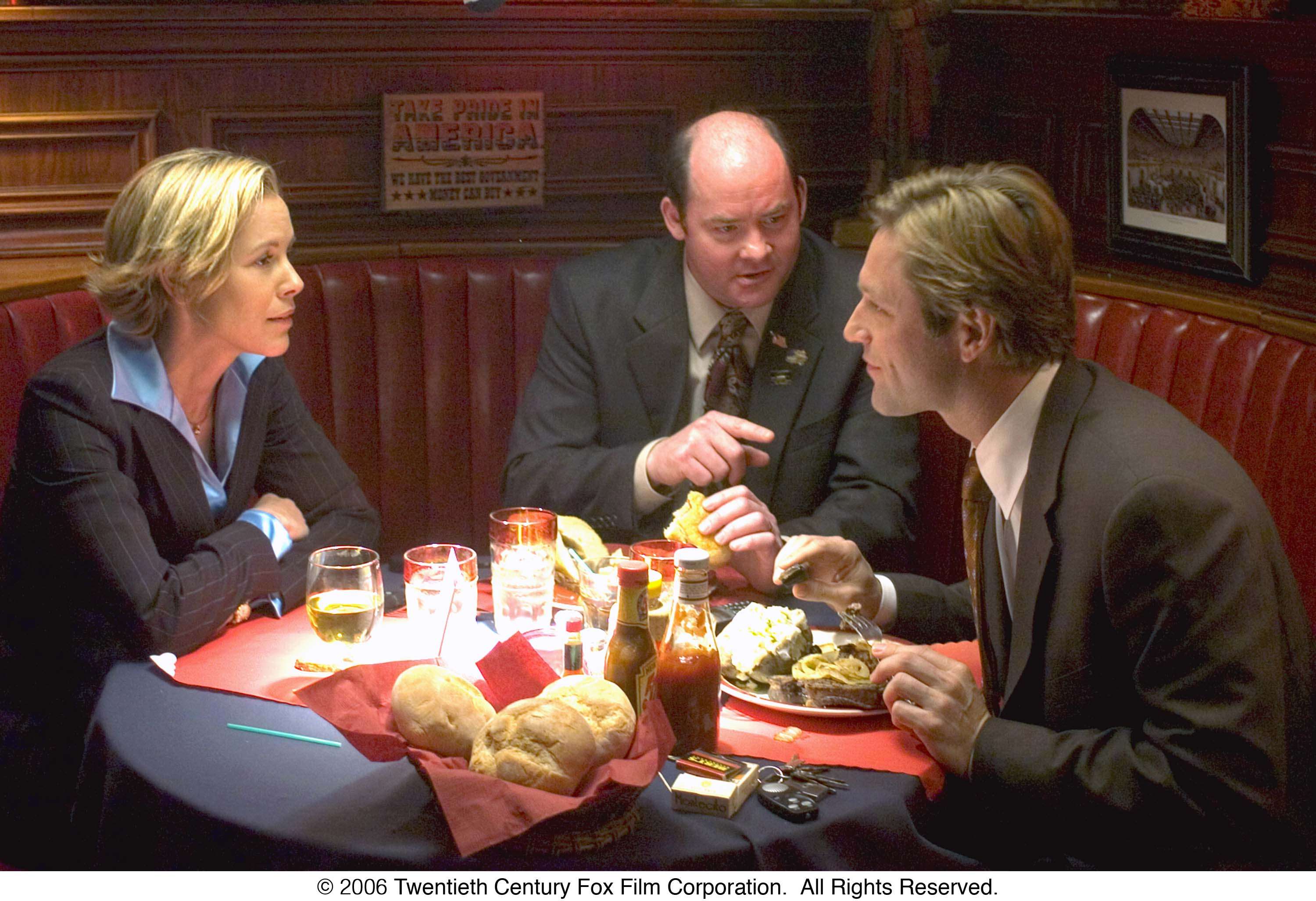
A special research report on “The Image of the Public Relations Practitioner in Movies and Television 1901-2011” is featured in a special edition of The IJPC Journal (Volume 3, Fall 2011-Spring 2012) on public relations and popular culture. As the report’s introduction notes, it is the most ambitious study of its kind, analyzing the depiction of the PR practitioner in more than 300 movies and television programs over the past century. The report and its appendix find that popular culture’s portrayal of public relations professionals has been similar to that of news journalists in that it has varied widely over the years and has not always been so negative as some real-life professionals fear.
A companion piece to the study is the 2011 IJPC Associates video:The Image of the Public Relations Practitioner in Movies and Television, 1901 to 2011, 11:46:05 video compilation with 326 movie and television clips tracing the history of the public relations practitioner in the 20th and 21st centuries is now available to all new and sustaining IJPC Associates.
The Image of the Public Relations Practitioner in Movies and TV
1901 to 1959– 113 clips – 3:41:07
The Image of the Public Relations Practitioner in Movies and TV
1960 to 1996 – 120 clips – 4:02:49
The Image of the Public Relations Practitioner in Movies and TV
1997 to 2011 – 93 clips – 4:02:39
The nearly 12-hour-plus video is invaluable for research into this new academic field and for teaching a class in the image of the public relations practitioner in popular culture.
A Special Preview of the public relations video compilation running 13:30 and containing 64 clips is now available to all IJPC members.
Also included on the IJPC Website:
- A complete description of every film and television show included with selected photographs.
- Nearly 1,300 entries in the IJPC Database feature public relations practitioners and publicity.
- A section on Public Relations research is included in the Resources section.
- Classroom lesson plans
THE IMAGE OF THE GAY JOURNALIST IN POPULAR CULTURE
The IJPC Project is spearheading research on the image of the gay journalist in popular culture.
There has been virtually no research done in this field. We want to explore the image of the gay journalist and public relations practitioner in movies, television, novels, comic books and other areas of popular culture.
We encourage you to participate in this area of research.
We also encourage you to send manuscripts on the subject to peer-reviewed The IJPC Journal as well as articles to the IJPC Web site. Contact [email protected] for further information
The Image of the Washington Journalist in Movies and Television
In the first study of its kind, IJPC director Joe Saltzman and senior IJPC research associate Liz Mitchell reveal the results of viewing 127 English-speaking films and television programs from 1932 to 2013 that include Washington D.C. journalists as correspondents, anchors, editors, columnists, producers, photojournalists, publishers, and more recently, bloggers. Their special research report, “The Image of the Washington Journalist in Movies and Television, 1932 to 2013” is published in The IJPC Journal, Volume 5. It categorizes journalists by decade, genre, gender, ethnicity, media category, job title and description. Each image presented by an individual journalist or group of journalists is coded on a subjective scale of very positive, positive, negative, very negative and neutral. An appendix provides a brief description of each film and television program and a breakout of the categories.
The 2013 IJPC Associates Premium video: The Image of the Washington Journalist in Movies and Television, 1932 to 2013, 8 hours and 20 minute video compilation with 126 movie and television clips tracing the history of the Washington journalist in the 20th and 21st centuries is now available to all new and sustaining IJPC Associates.
The Image of the Washington Journalist in Movies and TV, 1932 to 1995, 67 clips, 263 minutes.
The Image of the Washington Journalist in Movies and TV, 1996 to 2013, 59 clips, 239 minutes.
Joe Saltzman presents a summary of the study of “The Image of the Washington Journalist in Movies and television, 1932 to 2013” at the National Press Club in Washington D.C. on Thursday November 13, 2014 at 6:30 p.m. The presentation included a 15-minute video excerpted from the 8-hour and 20-minute video compilation.
HENRY JENKINS OFFICIAL WEBLOG: Confessions of an Aca-Fan
The Image of the Journalist in Popular Culture: An Interview with IJPC Director Joe Saltzman (In Three Parts)
LATEST IJPC RESEARCH MATERIALS ON FILM, TELEVISION AND FICTION
There has not been much written on the image of journalists and public relations practitioners in movies, television, radio or fiction. The Image of the Journalist in Popular Culture recommends the following books, articles and websites.
Updated: 5-2011
IJPC Associate Director Matthew Ehrlich
Journalism in the Movies
(University of Illinois Press)
"Hollywood and Journalistic Truthtelling"and
"Facts, Truth and Bad Journalists in the Movies"
IJPC Associate Director Richard Ness
Chief Film Consultant-Researcher
Encyclopedia of Journalists on Film
Needs Your Help (updated 11-2011)
IJPC STUDENT RESEARCH PAPERS
The IJPC Student Research Papers section offers undergraduate and graduate students an opportunity to share research about the image of the journalist in popular culture and contribute to the information base of this ever-growing field.
We invite any submissions of papers by students that investigate and analyze the conflicting images of the journalist in film, television, fiction, radio, comic books, cartoons, comic strips, commercials, art, music and any other aspect of popular culture demonstrating their impact on the American public's perception of its journalists.
Editors are Matthew C. Ehrlich, Professor of Journalism at the University of Illinois at Urbana-Campaign and Joe Saltzman, Professor of Journalism at USC Annenberg.
Updated: 12-2022
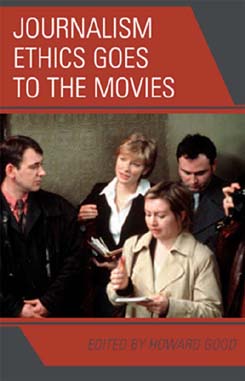
JOURNALISM ETHICS GOES TO THE MOVIES IJPC VIDEO
Based on the book edited by Howard Good
JOURNALISM IN THE MOVIES
by Paul Schindler
Reviews of films featuring journalists
Updated: 4-2016
The Leonard Lopate Show: Projections, Journalism on Film
On the Media from NPR: Investigative Journalists on Film
Joe Saltzman, director of the Image of the Journalist in Popular Culture, discusses the movie reporter.
Radio broadcast and transcript
About The Image of the Journalist in Popular Culture Project
The mission of the Image of the Journalist in Popular Culture, a project of The Norman Lear Center at USC Annenberg, is to investigate and analyze, through research and publication, the conflicting images of the journalist in film, television, radio, fiction, commercials, cartoons, comic books, video games, music, art and other aspects of popular culture demonstrating their impact on the American public's perception of newsgatherers. Founded in 2000, the project is directed by Joe Saltzman, professor of journalism at the USC Annenberg School for Communication & Journalism.
For more information: IJPC Factsheet
The Image of the Journalist in Popular Culture with Joe Saltzman -- a visual summary of IJPC research at USC Annenberg
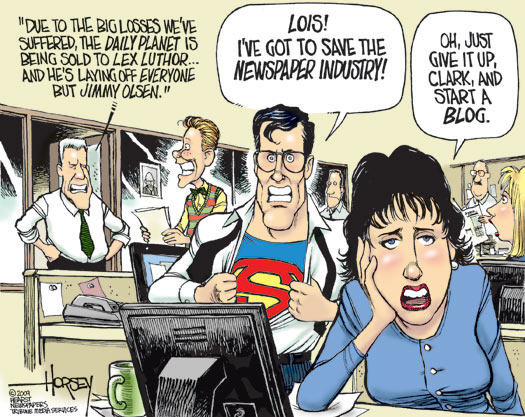
Click on the image of Clark Kent reading the Daily Planet to see how even the Daily Planet has been caught up in the 21st century newspaper turmoil.
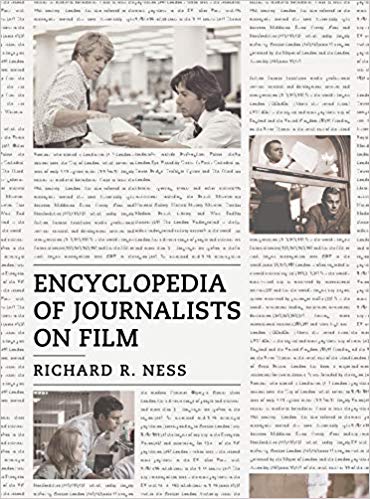
Encyclopedia of Journalists on Film
By Richard R. Ness
Professor of Film and Media Studies at Western Illinois University
Publication date: January 2020. Rowman & Littefield Publishers
ORDER NOW
Heroes and Scoundrels:
The Image of the Journalist in Popular Culture
By Matthew C. Ehrlich
Professor of journalism at the University of Illinois at Urbana-Champaign
and
Joe Saltzman
Professor of journalism and communication at the University of Southern California
Publication date: April 2015. University of Illinois Press
ORDER HERE
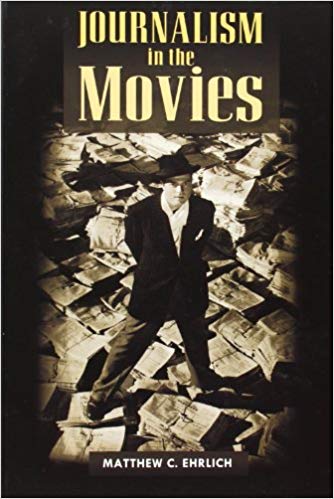
Journalism in the Movies
By Matthew C. Ehrlich
Professor of journalism at the University of Illinois at Urbana-Champaign
ORDER HERE
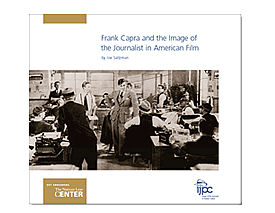
Frank Capra and the Image of the Journalist in American Film
By Joe Saltzman
Professor of journalism and communication at USC Annenberg
ORDER HERE